
‘PR Hall of Shame’ will create a new media landscape: are you ready?

This week, Press Gazette, a leading publication for journalism and media industry news, published the ‘PR Hall of Shame’, a live document highlighting unscrupulous brands and PR agencies that are associated with “more than 1,000 fake stories” that have been published in the mainstream media.
The initiative has been launched as an appeal to journalists and PR professionals to report any incidents where they suspect experts used in media stories are ‘fake’ (i.e. do not exist) or ‘fake AI-enhanced’ (i.e. AI is used to produce content that is outside of the expert’s realm of expertise). The publication warns that use of these fake experts threatens the credibility of the press, and the trust between journalists and PR professionals - and we would add that it risks creating untold damage to any organisations found to be connected to it.
This is a significant story and, we believe, the start of a shift that is likely to change the relationship between the media and public relations, increasing the value created by reputable PR agencies and professionals, who have built long-term trusted relationships with journalist partners.
What’s happened?
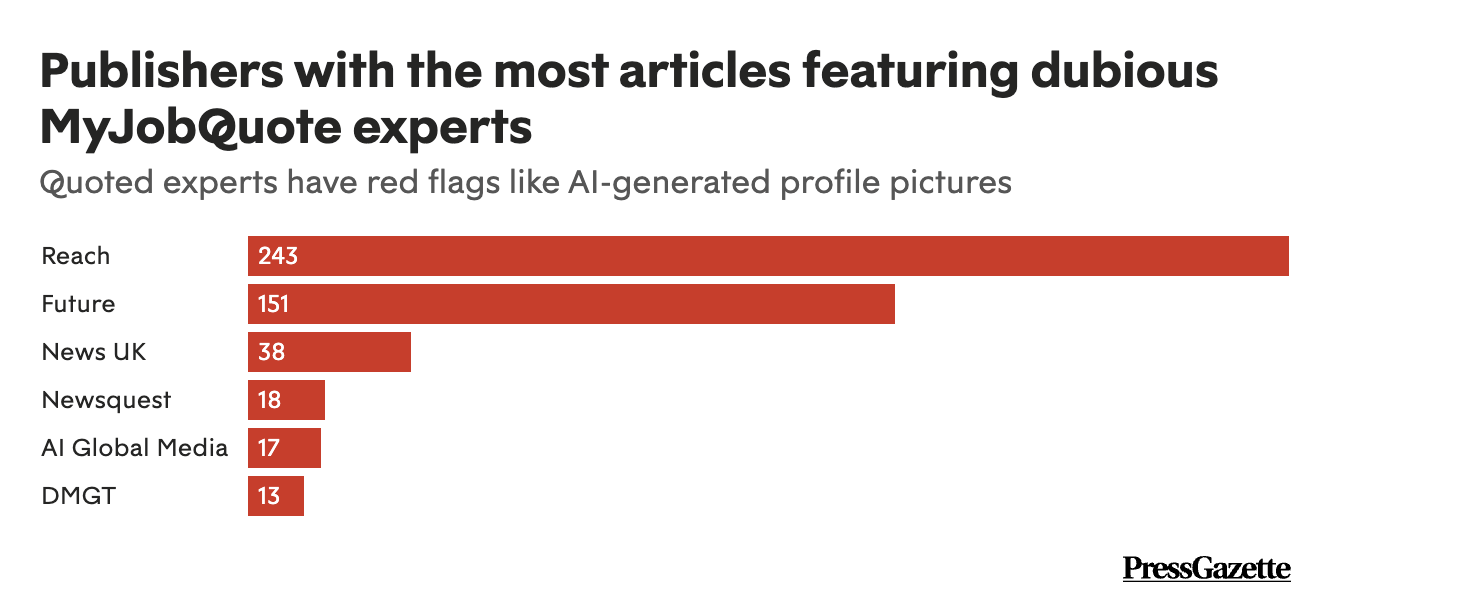
Table by Press Gazette showing which major media groups have published the most articles containing fake content by one dubious company.
The article reveals that journalists are being bombarded with “sometimes hundreds of dubious press releases per week”, often bolstered by commentary from ‘fake people’ who do not exist in real life and with content that has been found to be mostly or fully generated by AI.
This fake content has regularly found its way into the mainstream UK media, with a table showing that Reach PLC (owners of sites like the Mirror, Express, OK! Magazine and Manchester Evening News) have been caught out the most often, followed by Future PLC (Live Science, Tom’s Guide, The Week) and News UK (The Times, The Sun and Talksport).
Why does it matter?
Press Gazette describes this as “polluting the UK media with low quality and misleading AI slop.” These are, after all, fake articles, that have been generated with only one aim, securing media coverage and backlinks that boost the author organisation’s ranking in search engines (e.g. Google) and AI answers (e.g. ChatGPT).
In the case of healthcare, the practice could put the public in danger, by exposing them to fabricated health advice, authored by fake clinicians and published by independent trusted media outlets, like those listed above. The article names and shames two healthcare brands, and also lists two made up health professionals - a nutritionist and a psychiatrist - whose AI-generated words and pictures have been featured by the UK press.
This first instalment of the campaign focuses on ‘made up’ content, but the Press Gazette says that in the coming days it will also lift the lid on the growth of ‘borderline cases’, where content is assigned to real people who do not have the expertise that the article claims or infers.
How will this impact the media landscape?
Last month I was asked by PRMoment to predict what changes the PR industry might expect to see in 2026. I touched on three key areas relating to trust, governance and content, and this new campaign by Press Gazette has inspired some further thinking in these areas, which I have outlined below:
Increased value placed on evidence, experts and relationships
While this initiative is titled the ‘PR Hall of Shame’, the subtext to journalists is clear - you need to be more careful about who you are working with, and you need to introduce better processes and governance to ensure that so-called ‘experts’: do exist in real life; do have the expertise claimed or inferred; and have been involved in the creation of the content that is assigned to them.
The value of PR professionals having trusted relationships with journalists that they have been built up over time through frequent interactions has just increased tenfold. As a specialist healthcare PR agency that prides itself on the quality of relationships that we hold across broadcast, national print/online and healthcare and health tech specialist media, this is a positive step.
There will also be increased scrutiny on data, evidence and advice - all of which, again, is particularly important in the case of healthcare. PR agencies that deal in data will need to become much more proficient in understanding, presenting and discussing that data, since journalists will be increasingly challenged to check its truthfulness and its accuracy. So-called ‘artistic licence’ with data should and, I think, will, be clamped down upon, as we ultimately revert back to a greater focus on quality of news output over quantity. This shift will also align with the changes that publications have been making to their business models, with revenue increasingly being generated from subscriptions rather than clicks/advertising.
I have long held concerns about health advice being flippantly generated and disseminated with the goal of securing backlinks, rather than having a meaningful impact on people’s health and organisational goals. I expect that we will see a reduction in this kind of content or at least greater focus on its clinical accuracy, as the media responds to the challenges posed by AI.
2. PR agencies will be forced to implement more robust processes and governance
The rush to embed AI in daily processes in the name of efficiency gains will need to be at least matched by improvements in governance.
For example, research summaries by AI agent Perplexity can be a helpful starting point but they frequently misrepresent findings and so cannot be relied upon. AI agents can generate copy in minutes but, as this article by Press Gazette makes clear, this is not content that journalists wish to receive. In fact, guides and technology are already being produced to support journalists to be able to identify and discard ‘AI slop’ content, and commentators suggest that this content also performs much worse in SEO and AI answer rankings. Image generators like Nano Banana can create lifelike pictures in the time it takes to write out the idea, but many media outlets have policies to never include AI-generated imagery.
Campaigns like this one by Press Gazette will force PR agencies to implement clear policies and governance to protect the reputation of their clients and of their own businesses. Investment in training on topics like ethics, governance and leadership will become a necessity. As a Chartered PR professional, this is something that I already take very seriously. Only last month, we had a full day agency-wide training session on AI with specialist consultancy, Purposeful Relations - which included a detailed focus on policies and governance. We consistently discuss issues around ethics and truth within the agency, which is built on a culture of professionalism. If the media tightens its own policies and governance, then the PR industry will undoubtedly have to follow suit - and that can only be a good thing.
3. Strategic breakthrough campaigns will replace the focus on high volume low quality content
It’s now 18 months since I wrote an article for CIPR Influence titled ‘The tragedy of high volume low impact communications’, where I described how placing too great a focus on volume of content and activity, and not enough on strategy and outcomes, inevitably leads to reduced impact for PR and communications.
I wrote the piece after observing a gradual rise in the generic SEO-motivated content that often could have ‘come from anyone’. Proponents were not focused on creating business impact but on hitting low value KPI targets for number of media mentions and backlinks.
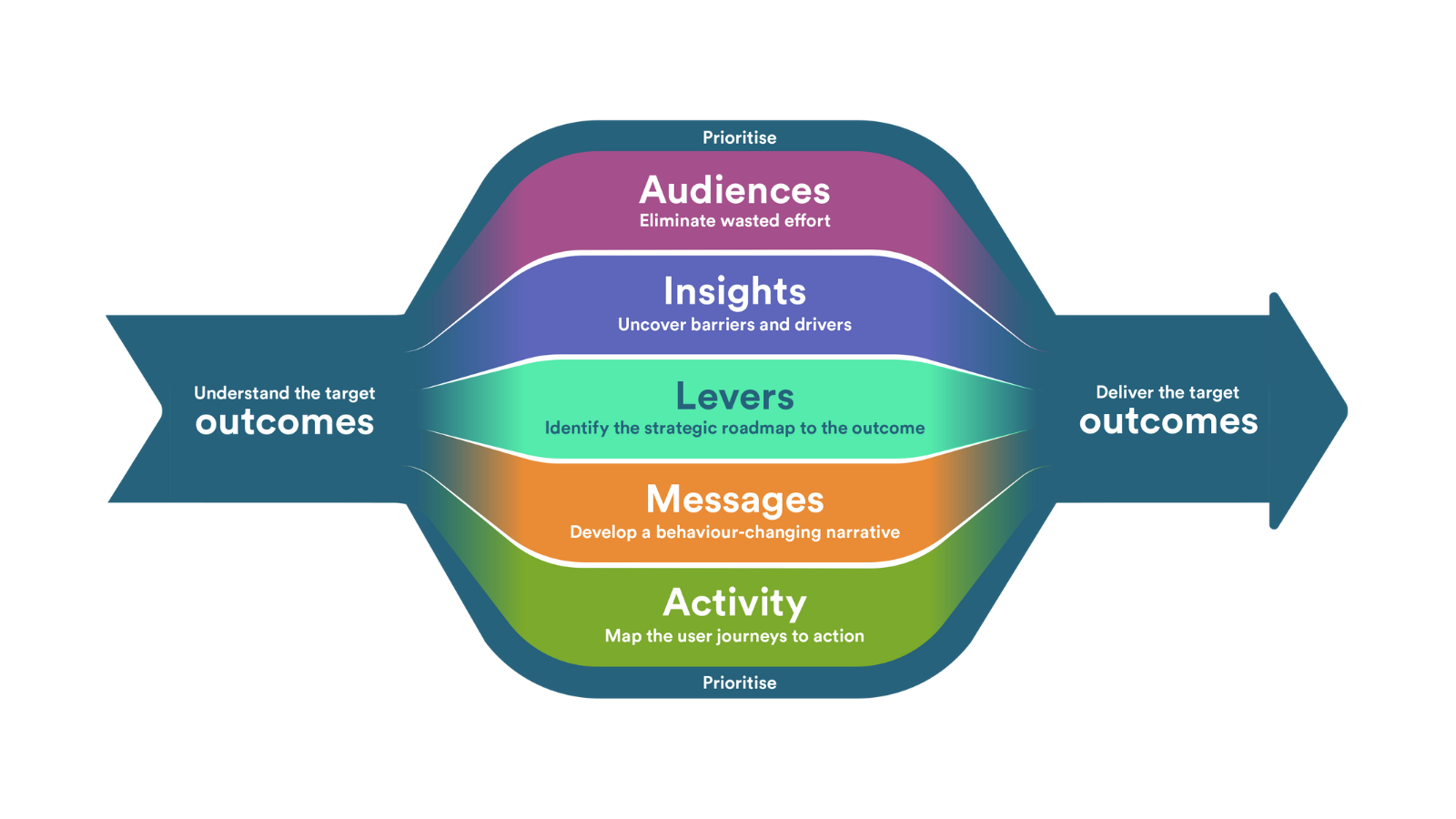
The MERTO Map is Evergreen PR’s strategic planning tool, designed to identify the ‘most effective route to outcome’.
The tactics usually involved creating and distributing poorly researched ‘expert’ articles or badly designed survey based stories with a heavy dose of interpretation applied to the data. The result was a flood of low value content that would ensure KPIs were met but the work often had no positive impact on the reputation or revenue of the organisations they were developed for - meaning the investment of time and budget was being wasted.
Of course, the rapid rise of Generative AI, which enables content like this to be created many times more quickly and easily, has led to journalists being flooded with it - and the Press Gazette article confirms that they have had enough.
In this new media landscape, journalists will see even greater value in multi-layered breakthrough campaigns. Ambitious healthcare organisations should therefore get off the hamster wheel of rapid content generation, take a step back and start to engage with the media and other stakeholders more strategically, for maximum impact.
Having won around 40 industry awards for our high-impact breakthrough health campaigns we have been developing our model for the key elements to focus on. Breakthrough campaigns should be: impossible to ignore, highlighting consequential issues and providing new perspectives; impossible to deny, being based on solid evidence and human expertise; and possible to lead, providing an opportunity for your healthcare organisation to make a meaningful contribution to understanding.
I think this is where we are headed.
The Press Gazette article makes clear that the media wants real authentic content and it is putting in place systems, processes and technology to support this. Those organisations that respond by using technology to simply increase the volume of content will not succeed. Those that invest their energy and budget into strategy, relationships and high quality multi-layered work will be the ones to succeed in this new media environment.

Leigh Greenwood is the founder and managing director of Evergreen PR, the healthcare PR agency that makes health happen. He is a chartered PR professional who has been working in healthcare PR, public affairs and communications for the last 20 years. He has worked across the whole spectrum of healthcare and has won more than 40 industry awards for effective health campaigns that generated measurable outcomes.
Find out more about Evergreen PR: about us, our services, our work.