
Three leadership lessons from the CIPR Annual Conference
I’ve worked in healthcare PR leadership roles now for upwards of 12 years, including in-house at a major weight loss brand and in a large integrated agency - before setting up Evergreen PR, a leading health communications agency, about six years ago.
I’ve done a fair bit of training in leadership over the years, but I must confess I have done slightly less over the last 3-4.
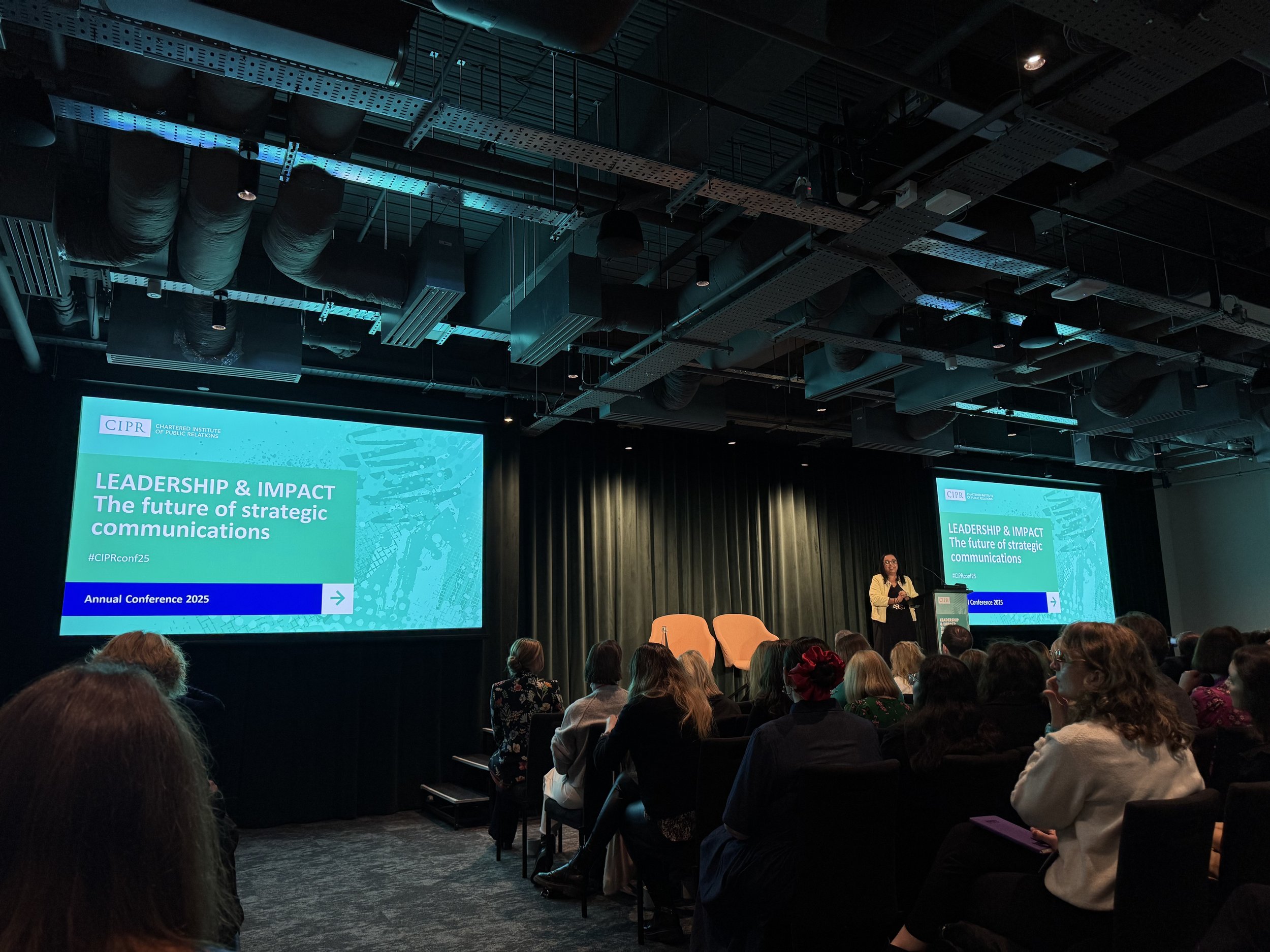
So when the Chartered Institute of Public Relations (CIPR) announced that its Annual Conference would this year centre on the topic of ‘Leadership and Impact’, I was straight on to Trainline to book my travel for the day.
The event featured a fantastic array of speakers, including:
James Peach - Former Marketing Director at Innocent, Vinted, Uber and Coca Cola
Priya Lakhani - Host of the BBC’s weekly AI segment and co-writer of the recent Government review on AI
Dr Jack Lewis, Neuroscientist and TV presenter
Karen Blackett CBE, former WPP UK President
As you can imagine from the names shared above, it was a wide-ranging set of presentations, and an enormous amount was covered.
I took a lot from it and here were some of my key learnings and how I am thinking of them in terms of my role at Evergreen and how we counsel the healthcare client leaders we support, who are often operating against a similar backdrop.
The world is currently volatile and uncertain - we must accept that and work within it
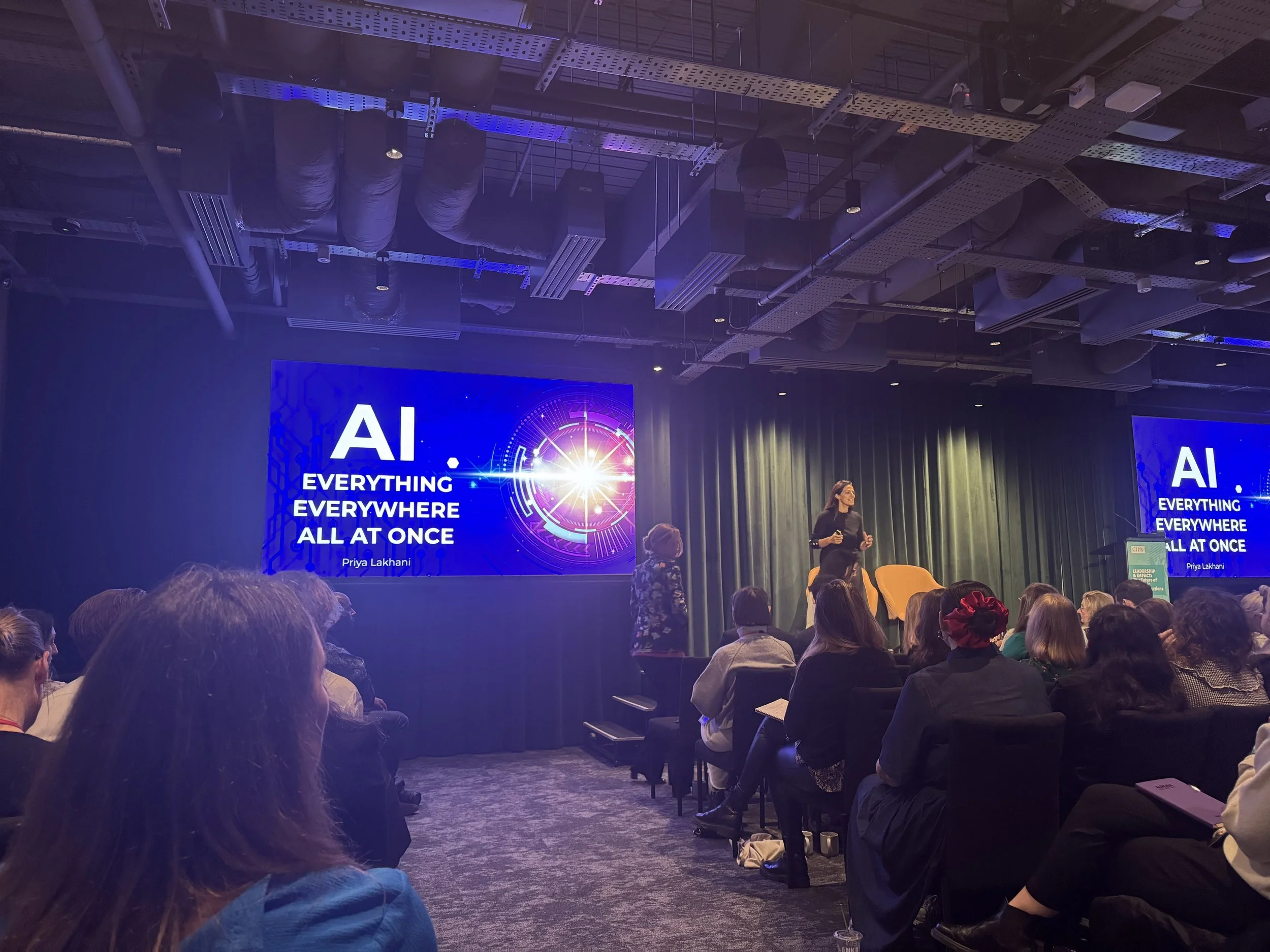
Priya Lakhani, BBC AI correspondent, gave us a run down of the latest thinking.
The line ‘change is the new normal’ came up several times throughout the day, and numerous speakers spoke about how this can cause fear and paralysis for many. Karen Blackett described a ‘VUCA world’, which stands for volatility, uncertainty, complexity and ambiguity. It feels like an accurate description and one that creates challenges for communications and leadership.
Her advice was to not pretend that the future is clear, but to instead offer honest leadership that accepts and embraces the reality. Karen Blackett CBE described the need to humbly ask questions and listen, while James Peach emphasised the importance of creating a culture of psychological safety, where people feel supported to take risks in order to improve results.
We heard how AI advancement is a major driver of stress - with employees worried it will take their jobs or concerned about their ability to become proficient at pace. But, as Priya Lakhani described, leaders need to take employees (and partners) on a journey with them if they are to unlock the potential of this technology. That’s certainly the approach we are taking at Evergreen, and last week we welcomed leading PR Futurist, Stuart Bruce, to deliver an exclusive agency-wide training session on how we can build AI into our agency in a way that is ethical, transparent and in the interests of both our team and our health and medical sector clients.
The greatest gift a leader can give is clarity
Naomi Goodman, MHP Group, said that this constant backdrop of unpredictability means leaders must be continually assessing what is important and what is just noise. If we can identify what truly matters, we can share that clarity with others.
While it is true that there is great uncertainty around us right now, it is always possible to make informed judgments if we know how to see the big picture. This is also the view of James Peach, who said ‘prioritising perspective’ is the most important element of modern leadership. He advised delegates to step back, see the big picture and prioritise what will be effective in order to take people on the journey with you.
A few years ago, I developed a strategic planning tool called the MERTO Map. MERTO stands for ‘most effective route to outcomes’, and this framework is something the wider agency team and I use to inform all of our planning and decision-making, both for our healthcare clients and for the agency itself. It brings together objective information/data, expert and audience viewpoints and personal experience to define the optimum route for achieving a target outcome. I use this for all major decisions and should probably use it for smaller ones too - that might be a new year’s resolution for me.
We have found MERTO to be a great way to get internal and client teams on the same page from the very beginning. I also received a great compliment recently when, after delivering a short demo of the methodology to Stuart Bruce, who is a Fellow of both the CIPR and AMEC, said it is the first agency planning framework he has come across that he doesn’t think he could improve. Coming from Stuart, that is high praise indeed!
We are more effective when we build winning teams
Josephine Hansom, a Fellow and elected Board member of the Market Research Society, said that, in this uncertain world, leaders must build teams that are capable and motivated to figure out problems together.
A shared purpose can be instrumental here, creating a sense of belonging and inspiring team members to all pull in the same direction. We have certainly found this at Evergreen, where our mission to ‘make health happen’ unites our team and binds us to great-fit clients. Our common goal inspires strategic, creative and dynamic ‘breakthrough health campaigns’ that have a measurable impact on health and our clients’ objectives, even winning UK-wide campaign awards.
Training was another topic that came up throughout the day. Josephine Hansom suggested that the most valuable skill anyone can have is ‘learning how to learn’, and championed the importance of effective and regular feedback and investment into people’s education. At Evergreen PR, every team member has an annual £1,500 Learning and Development fund, which we encourage them to use to develop skills that will benefit them and the agency - you can find out more about that and our other employee benefits over on our careers page. I try to give thoughtful and considered feedback, though I think there’s always room for improvement.
The importance of diverse teams to prevent groupthink was raised by Karen Blackett. This is an area where we are actively taking steps to try to improve, having already identified it as a potential weakness. By expanding our team and partner network to include greater diversity in terms of age, gender and ethnicity, we hope to be more representative and even more effective going forward.
An excellent event
This event actually took place on 13th November and so it has taken me a good while to get round to writing up my notes. That’s not a reflection on the quality of the day though - it was a great conference, with excellent speakers, and I learnt a lot.
The CIPR always puts on great events - I particularly enjoyed the last ‘Excellence’ Awards, although the fact we won UK Long Term Campaign of the Year for our work with the Royal College of General Practitioners may have had something to do with that! I’m grateful for the learnings and looking forward to applying them through 2026 and beyond, with the goal of becoming a more effective and impactful leader.
About the author:

Leigh Greenwood is the founder and managing director of Evergreen PR, the healthcare PR agency that makes health happen. He is a chartered PR professional who has been working in healthcare PR, public affairs and communications for the last 20 years. He has worked across the whole spectrum of healthcare and has won more than 40 industry awards for effective health campaigns that generated measurable outcomes.
Find out more about Evergreen PR: about us, our services, our work.
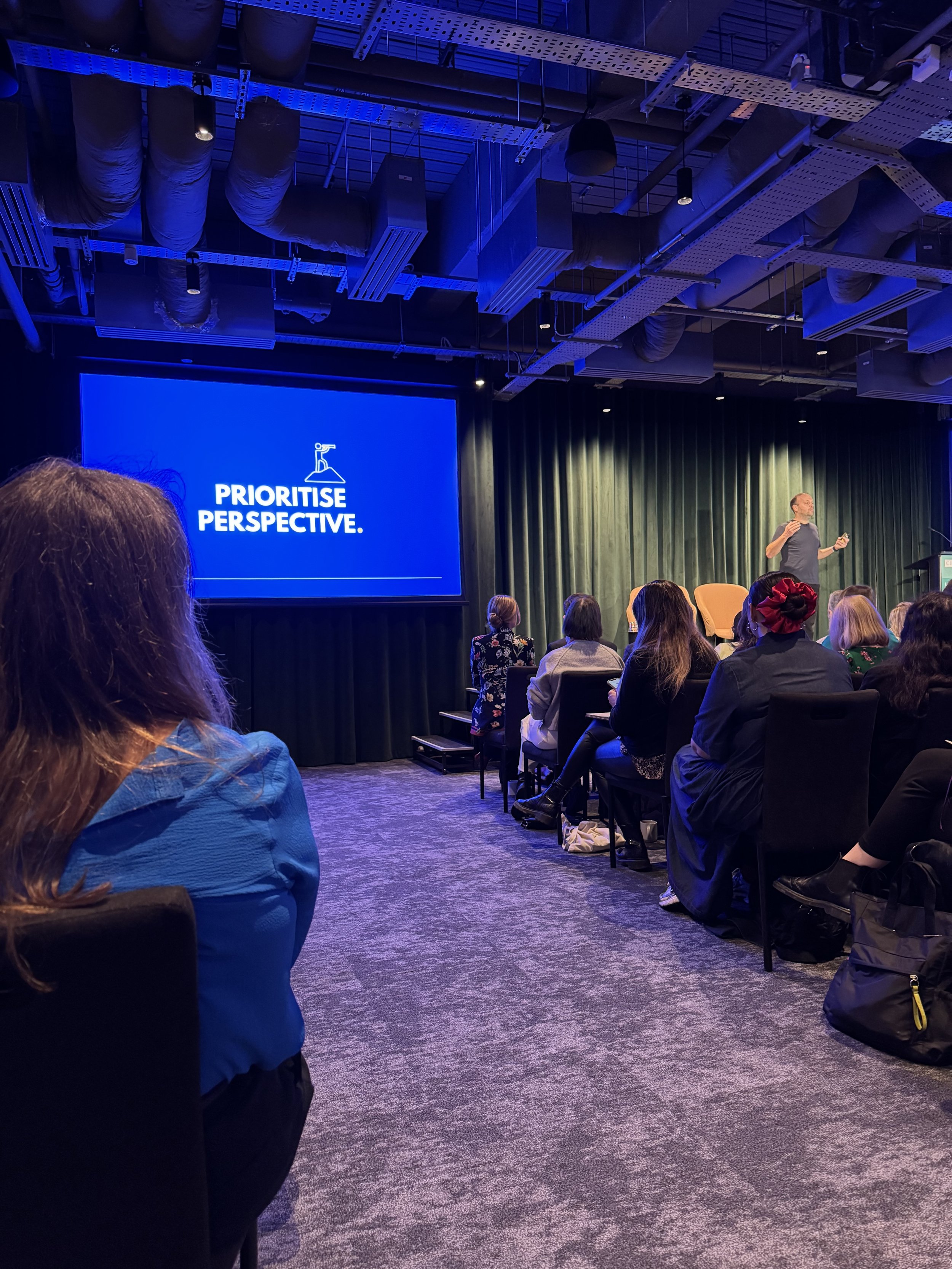
James Peach talked about how perspective can reduce stress and give people the clarity they need.