
New research by Kings College London has found that healthcare campaigns that focus on long-term engagement can be effective in changing behaviour and in achieving enhanced credibility for partner organisations.
The finding is based on a series of campaigns by the global breast cancer charity, Know Your Lemons, in partnership with Asda - and we think the learnings can be applied more widely.
At Evergreen PR, we aim to ‘make health happen’ through breakthrough healthcare PR campaigns that deliver immediate impact and sustained long-term reputation capital. This approach requires us to get close to the essence of the health organisation we are working with, so that we can devise campaigns that have the depth of meaning needed to enable us and our clients to continue to build on them for many years.
In 2023, our healthcare PR agency won the CIPR Excellence Award for the UK’s Best Long-Term Campaign for our work with Tinnitus UK, which we delivered over a three year period. This year, in 2025, we are shortlisted again, for our work with the Royal College of GPs for our campaign to Give Veterans the Healthcare They Deserve, who we have been working with for almost four years.
So how can healthcare companies and health organisations develop breakthrough healthcare PR campaigns that deliver both an immediate impact and long-term value? There are three main elements.
1. Identifying a cause that sits at the very core of why the organisation exists
If you are the Director of Communications or Marketing at a health organisation and have overall responsibility for the campaigns that come out of your organisation, then I think you should think of them like an artist thinks about their body of work. You should be asking yourself ‘what do we stand for?’, ‘how do these campaigns fit together?’ and ‘what is our common thread?’.
If you just flit from one healthcare campaign to the next, always just chasing the short-term idea without thinking about your broader purpose, then your impact will always be limited to short-term, too.
The right idea and concept is connected to the core purpose and values of the organisation and must bring with it enough space to grow.
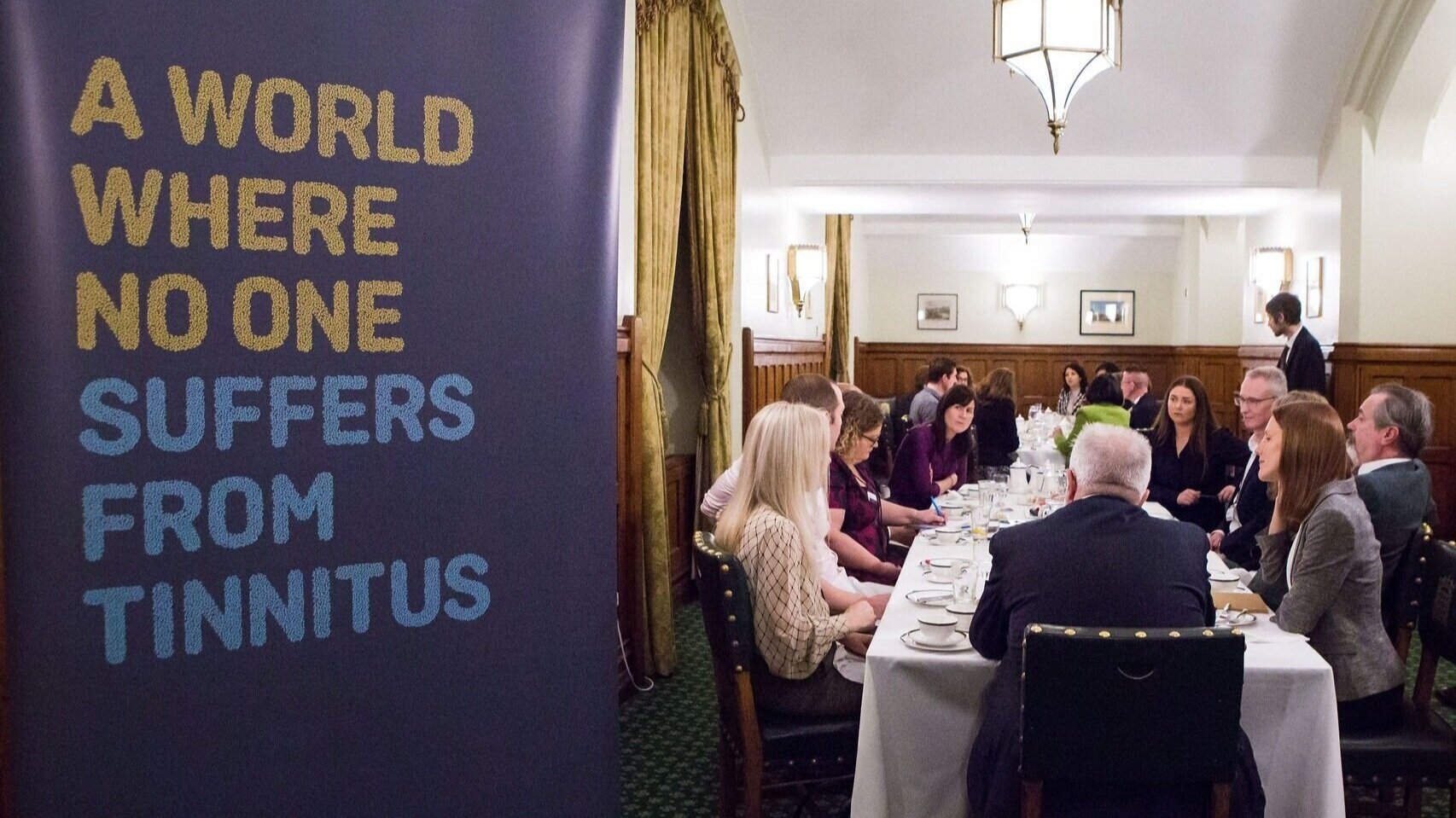
When we worked with Tinnitus UK, their goal to was to support their community by identifying cures for tinnitus. We launched The Tinnitus Manifesto campaign to call for more funding for research - generating 140,000 petition signatures, a debate in the House of Lords and, a year down the line, driving the Department of Health and Social Care to set up a working group to discuss tinnitus research funding - with our client’s Chief Executive selected as one of eight people to sit on the DHSC’s working group.
However, we didn’t stop there, and the next phase of the campaign was about saying where that research money should be spent, with our campaign for a Tinnitus Biobank, which generated 172 media placements - including BBC Breakfast, BBC Radio 1, BBC News Online and The Times - ultimately leading to 3,500 people signing up to the project and several conversations with funders.
None of that would have been possible had the campaign narrative arc not been informed by what was important to the charity and its community.
2. Finding the right partner or partners
The research by Kings College London talks about how a great health awareness campaign can benefit both the core organisation that it comes from and those that partner in the campaign. We completely agree, and finding the right partner is key.
A good partnership is based on natural alignment around a common cause. Last year, we worked with our client, the Personalised Care Institute (PCI), to broker a partnership with the Money and Pensions Service (MaPS), an arms-length body sponsored by the Department for Work and Pensions.
This was a natural fit as, with the cost of living crisis pushing more people into poverty, the PCI wanted to ensure that health and care professionals were equipped and confident to have financial wellbeing conversations with their patients, while MaPS wanted to ensure that people could access their financial wellbeing resources.
Working together, we created the ‘Money Talk Toolkit’ - a new educational resource that could be used by health professionals to upskill in key areas such as managing financial conversations and knowing where to signpost patients.
The Money Talk campaign generated 34 media and stakeholder placements - including 27 backlinks - which led to more than 4,000 health and care professionals accessing the resource in under one month. In addition, the campaign built reputation capital for the PCI, which received thank yous from a range of organisations, who were grateful to it for taking a lead on this important issue.
While the above is a good example of a great-fit official partnership, as a healthcare communications agency that recognises the importance of excellent relationships, we believe the same thinking should be applied to all stakeholders. We always look to work with journalists who are aligned in interests with our clients offerings, and with professional member associations, charities and other organisations that share the same world view. From bringing together a medical software businesses and an NHS Integrated Care Board for a joint report and webinar on diabetes prevention, as we did as part of a health tech PR campaign we did for Meddbase to bringing together primary care professional groups to run joint educational sessions, when we find the right partners, the opportunities will often show themselves.
3. Find new ways to breathe life into the narrative
Evidence shows that campaigns become more effective the longer their duration, the more channels they run across and the higher their overall spend - this evidence informs the Creative Commitment Framework.
In our experience at Evergreen PR, the key thing is to get the balance right in terms of maintaining consistency with an overall theme and brand while also finding ways to freshen up the narrative to achieve the consistent cut-through needed for long-term success.
A great example of how we have approached this is through our work to promote the Royal College of GPs’ ‘Veteran Friendly’ GP practices programme.
We began working with the College on this programme in late 2021. Following extensive desk research and interviews with veterans and primary care professionals, we identified two key narrative themes: veterans often have different health needs from the general population but are less likely to visit their GP as they feel they won’t be understood; and it is not possible for GP practice teams to identify a veteran or know what they are going through just by looking at them.
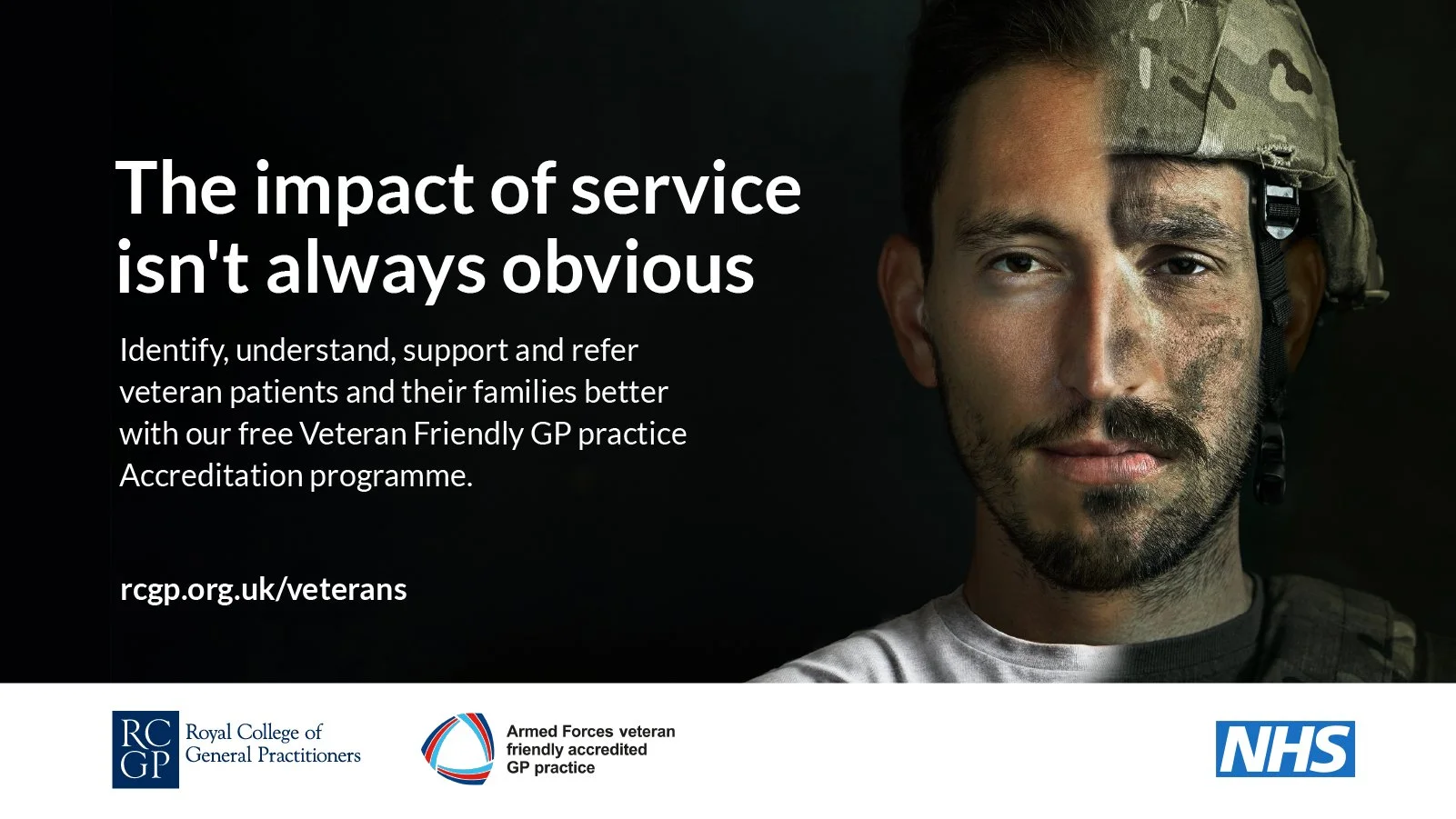
This led to the development of an excellent creative concept with our design partners at Everything’s Fine - with our evocative line working well alongside the split-face graphic.
Originally launched in 2022, this design has become synonymous with the programme and countless people who work in healthcare have told me over the years that they are familiar with it. We could have created a new one, but this is serving a purpose. When GP practice teams see it - as they do each year - they are reminded to take that step and sign-up, if they haven’t already.
However, a key part of our strategy has also been to secure cut-through with key media and gain the support of priority stakeholders, and for that we need to regularly freshen up the narrative.
Each year, we have devised a new topical news hook, linking to academic studies, external events and using creative language to shine a light on the ‘hidden health needs’ or ‘silent struggle’ of this vulnerable group.
Last year, upon securing a bigger budget - another of the three elements of ‘creative commitment’ - we were able to launch a much bigger campaign to ‘Make Veteran Healthcare a Mainstream Requirement’, targeting mainstream media, including national TV, radio and online - as well as the health professional outlets and stakeholders we had previously targeted.
We achieved significant spikes against the benchmark with each campaign, increasing gradually from a 220% spike with the first campaign to an 800% spike with the fourth campaign. With our most recent bigger budget campaign, we were able to breathe fresh life into our narrative by conducting research of 5,000 veterans, giving us some excellent data, which we used, alongside case study pairings to generate an excellent 168 media placements, including 12 minutes on BBC Breakfast, 9 minutes on BBC Morning Live, Sky News, The Guardian, The Independent and the British Medical Journal, as well as GP Online, Pulse and Nursing Times.
The campaign was another enormous success, achieving an extended spike of 400%+ up on the benchmark for four consecutive months! The result was that The Royal College of GPs hit its long-term target of having 50% of GP practices Veteran Friendly accredited 4 months early. Now that’s long-term impact!
About the author:

Leigh Greenwood is the founder and managing director of Evergreen PR, the healthcare PR agency that makes health happen. He is a chartered PR professional who has been working in healthcare PR, public affairs and communications for the last 20 years. He has worked across the whole spectrum of healthcare and has won more than 40 industry awards for effective health campaigns that generated measurable outcomes.
Find out more about Evergreen PR: about us, our services, our work.