
A new CBI report reveals five ways PR delivers real impact — here's what that means for health tech and health charities
I have always been surprised, and slightly frustrated, that many people think of PR quite simply as the pursuit of awareness through the media.
In fact, one of the reasons I founded Evergreen PR was due to a deep-seated belief that, when delivered strategically, PR can achieve so much more than many people realise - with multi-layered PR campaigns and programmes able to transform reputations and behaviour, and contribute to the bottom line.
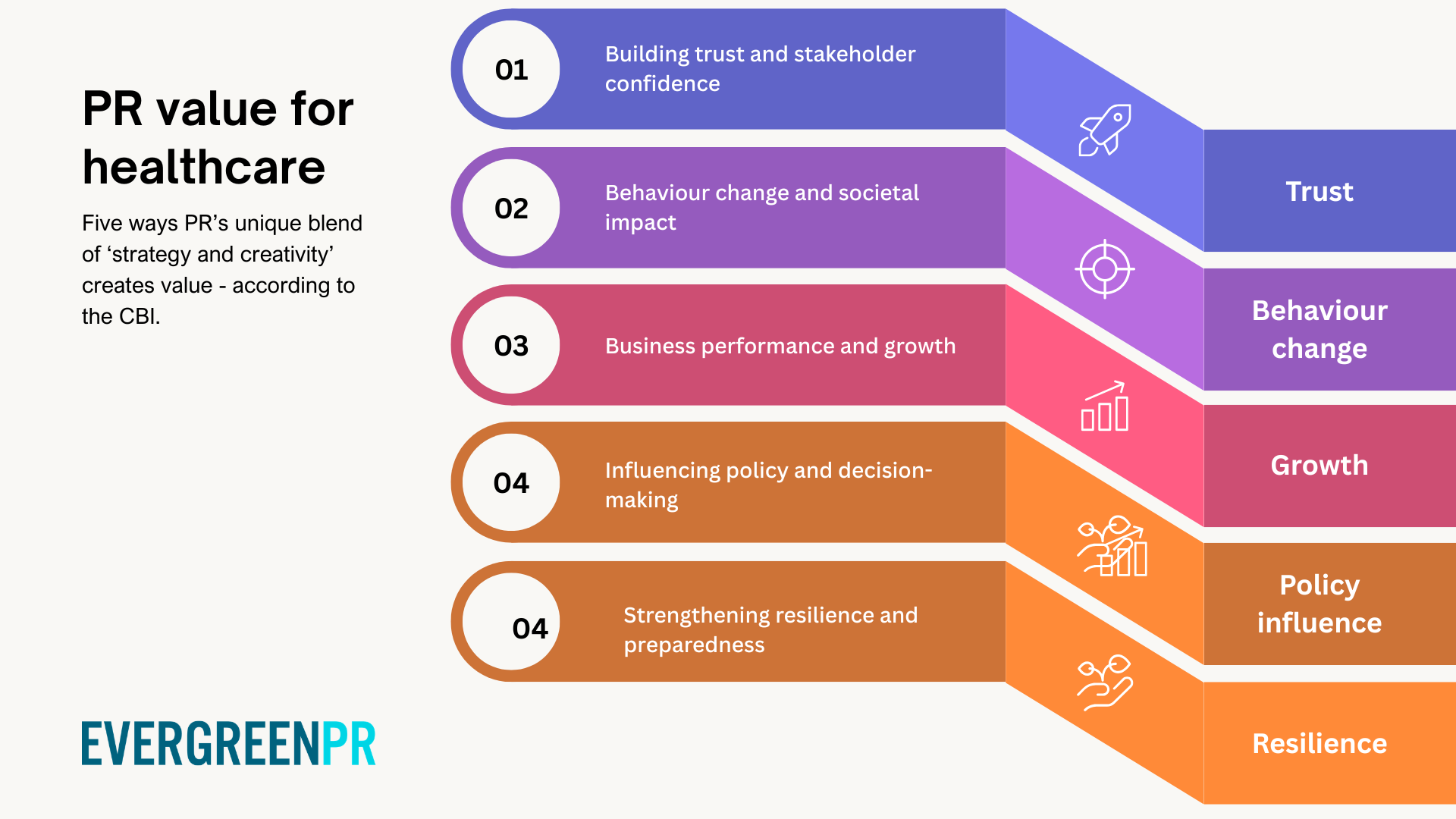
So it was very pleasing this week to see a new independent report from the Confederation of British Industry (CBI), commissioned by the PRCA, which asserts the significant value that PR delivers.
The key to this, the report outlined, is the profession's unique combination of strategic and creative capability. Amen, this is what I believe!
The CBI points out that, in the modern economy, businesses increasingly rely on PR professionals to help them navigate complex stakeholder environments, building trust, managing reputation and influencing behaviour while managing risk and uncertainty.
Applying this to healthcare
For health tech organisations, that can mean understanding who makes the buyer decision and who influences it, uncovering the motivation and capability barriers of those audiences and advising how company actions or comments might be perceived externally, as well as devising creative communications activity that takes people on a journey through awareness, engagement and action.For health charities, it might mean unpicking the biggest challenges facing your patient community to identify the root cause, and building an evidence-based case for what needs to change and why, mixing activity that generates visibility of an issue, with influencer engagement that increases the pressure for change.
At Evergreen PR, we find that identifying ownable territories and launching evidence-based multi-layered campaigns that help healthcare organisations to stand for something that their audiences care about is arguably the best way to achieve many of those objectives at once.
The report outlines five key impact channels.
Building trust and stakeholder confidence
Behaviour change and societal impact
Business performance and growth
Influencing policy and decision-making
Strengthening resilience and preparedness
I thought regular readers of our blogs and newsletter might appreciate a deep dive into how it is possible for PR to create measurable value in each of these areas, along with real-life examples of how we have done it for health tech and med tech companies, and health charities.
1. Building trust and stakeholder confidence
The report points out that in a modern environment that’s characterised by rapid information flows, concerns about misinformation and changing levels of confidence in institutions, organisations now face increasing scrutiny from stakeholders.Maintaining trust is vital for health tech and med tech businesses as there is always a suspicion that the commercial nature will always lead to suspicion that the primary motive is financial, and the desire to help the patients or clinicians you support is secondary.
The best way to earn trust and to demonstrate care for the audience you serve is to create value for them. Over the last few years, we have launched countless value-creating platforms that help our clients to earn the trust of their customers or community.
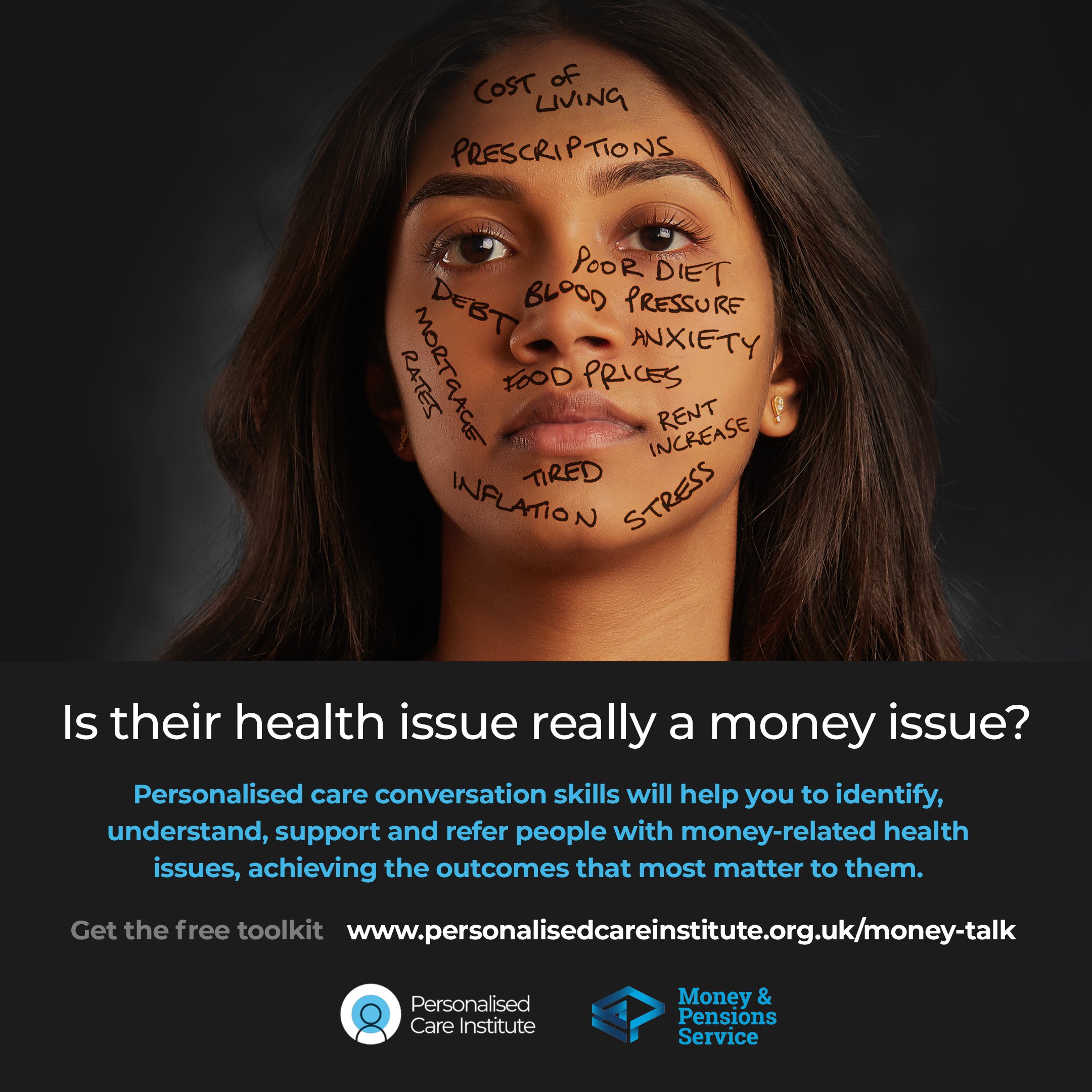
From our ‘Money Talk’ initiative for the Personalised Care Institute, which equipped healthcare professionals to learn how to discuss cost-of-living issues with patients, to ‘My Prosthetic Priorities’, a newly launched amputee patient education platform for Blatchford, which has earned the support of universities, media outlets and charities in both the UK and the US, initiatives like these demonstrate expertise and care, which are the very foundations of trust.From a business success point-of-view, when you have earned trust, it can influence a customer’s purchase decision, employee engagement and whether stakeholders wish to invest, engage or collaborate.
2. Behaviour change and societal impact
Whether encouraging healthier lifestyles, improving understanding of social issues or increasing participation in public initiatives, the CBI report rightly states that meaningful change usually requires more than simply providing information.
Health charities often come to us with the objective of securing behaviour change and social impact. Whether the target audience is the patient community, clinicians or government, the segments required are often the same.If you want an individual to take action you need to ensure they see your message (awareness), that they are emotionally engaged (motivation), that they trust what you say (authority) and they understand how to do the action required (capability).
You can see how these elements were built into our campaigns, whether attracting 3,500 people with tinnitus to sign up to a Tinnitus Biobank initiative (our campaign for Tinnitus UK), or attracting 75% of GP practices to voluntarily sign up to be ‘Veteran Friendly Accredited’ (our campaign for the Royal College of General Practitioners). We won the Chartered Institute of Public Relations’ UK award for ‘Best Long-Term Campaign’ in 2023 and 2025 for these two campaigns.
3. Business performance and growth
The contribution of public relations to organisational growth often occurs through reputation, stakeholder confidence and market positioning, says the CBI report.I would also argue that, in the world of health tech, it can have a much more direct and immediate influence.
Take our work with Meddbase for example, where we used the data from a diabetes-related pilot study they had conducted with NHS North Yorkshire, and turned it into a multi-faceted education-based campaign.We didn’t only win the attention of their target market, we also earned their trust and engagement. Having read about the pilot, which showed how Meddbase’s technology increased enrollment with the NHS Diabetes Prevention Programme, more than 100 NHS decision-makers attended an educational webinar. On that webinar, one attendee asked about buying the technology in the Q&A (the other attendees must surely have suspected they were a plant!). And our client confirmed high-value revenue return from one of the webinar attendees within three months of the campaign launch.
Longer term, we helped build the technology reputation of private physio company, Ascenti, launching a trio of thought-leadership reports related to virtual physiotherapy, app-based physio support and managing musculoskeletal health in the workplace. That work made Ascenti more visible, improved their positioning in the marketplace and helped strengthen their relationships with stakeholders and customers. They secured 10 new Private Medical Insurance and Occupational Health customers off the back of our campaigns and, over the last few years, the company has grown from a headcount of around 300 staff to more than 800. We also know that a number of clinical staff that joined the business cited our reports as factors that influenced their application.
4. Influencing policy and decision-making
The CBI report notes that PR plays a crucial role in shaping policy debates and decision-making processes, particularly when organisations need to influence legislation, regulation or public funding priorities. For health charities in particular, this is often where the real prize lies - not column inches, but a seat at the table when decisions are being made about research funding, clinical guidelines or NHS priorities.
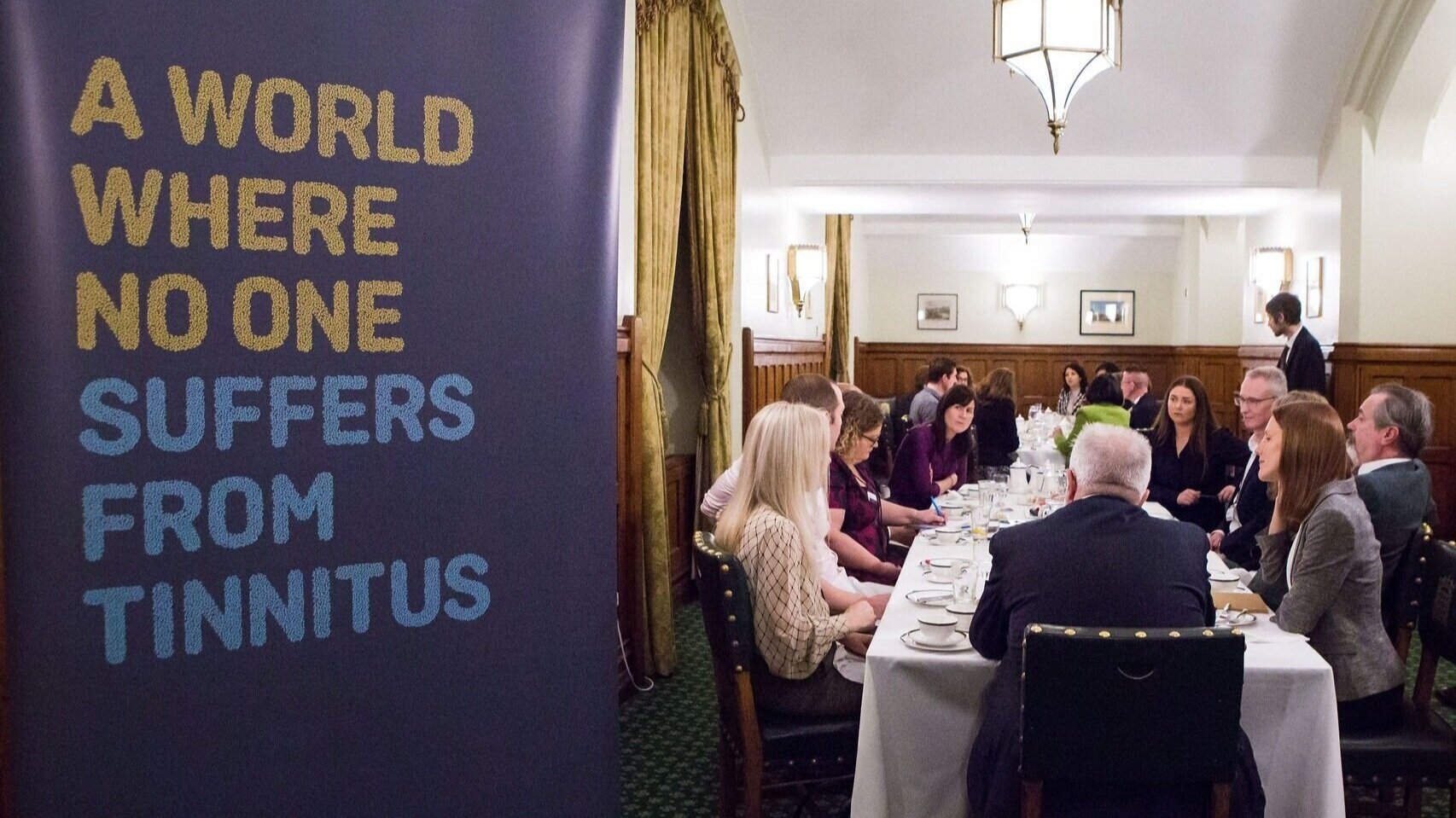
Our Tinnitus Manifesto campaign for Tinnitus UK is a good example of this in action. We brought together a variety of stakeholders, including people with lived experience, academics, clinicians and politicians to devise a unified vision for tinnitus research funding - and three clear policy calls that would make it a reality. Launching it into the media through ITV, The Times and the Daily Mail and into Parliament through MP advocate, Sir John Hayes, our petition for more research funding generated 140,000 signatures. That groundswell of support directly contributed to the Department of Health and Social Care establishing a working group of just eight people to shape future research funding for tinnitus and hearing loss. Our client's Chief Executive was one of those eight. That's the kind of outcome that strategic PR can deliver - not just increased awareness, but a client's voice in the room where funding decisions get made.
We saw a similar pattern with our work for The Sleep Charity, where academic evidence, lived experience and cross-party MP support combined to get the issue raised in Parliament on the very day our Manifesto was published - with the offices of two government ministers acknowledging and reading the report. With the right narrative, the right voices and executed through the right channels, it is possible to move decision-makers from awareness to action through strategic PR programmes.
5. Strengthening resilience and preparedness.
The CBI report also highlights PR's role in helping organisations navigate risk, manage uncertainty and build the kind of preparedness that protects reputation when things get difficult. This is often thought of narrowly as ‘crisis PR’ - the fire-fighting, holding-statement version of communications. In our experience, the more valuable version of resilience happens well before a crisis ever hits: sustained, careful reputation management that keeps an organisation in control of its own narrative under scrutiny, rather than reacting to it.
One example (details anonymised to protect client confidentiality) involved a medical technology provider that took on responsibility for a regional NHS service, inheriting a substantial patient waiting list in the process - and, with it, a wave of media scrutiny that could easily have been pinned entirely on the company. Rather than react defensively, we worked with the client to gradually reveal more context about the situation, helping journalists and stakeholders understand that its ability to clear the backlog was constrained by how the service was funded. That shift in understanding moved the spotlight to the real decision-maker - the local NHS funding body - and we advised the client on how to manage those conversations so that their NHS customer was never blindsided by coverage, as this would be important to managing the relationship. The result wasn't just calmer headlines, it also contributed to additional funding being released to address the backlog.
Much of the resilience and preparedness work we do for clients happens quietly and can't be shared publicly - media training, stakeholder mapping, messaging frameworks and issues management planning are best done long before they are needed. The benefits of building goodwill, by investing in creating value for stakeholder audiences and society should also not be underestimated. When organisations do good for others, they build social capital and that can stand them in good stead during challenging times.
Conclusion
When I set up Evergreen PR, I had a perspective that healthcare organisations don't just want more media coverage, they want more impact - and so an agency that is built entirely around delivering and proving that impact would stand out in a market where most PR is still sold on outputs.
Looking back at our work in this article, from a Chief Executive sitting on a government working group that’s discussing funding their cause to taking a health tech company from a standing start to high value NHS ICB sales off the back of one campaign, I’ve been proud to see how much impact it is possible to have by combining strategy and creativity in the way the CBI report outlines.
It’s brilliant to see independent confirmation of something we've believed, and built our agency around, for years: that PR's real value sits in the outcomes it enables, not the activity it produces.
If you're a health tech, med tech or health charity leader looking at your own communications and asking whether it's delivering outputs or outcomes, we'd love to talk.

Leigh Greenwood is the founder and managing director of Evergreen PR, the healthcare PR agency that makes health happen. He is a chartered PR professional who has been working in healthcare PR, public affairs and communications for the last 20 years. He has worked across the whole spectrum of healthcare and has won more than 40 industry awards for effective health campaigns that generated measurable outcomes.
Find out more about Evergreen PR: about us, our services, our work.